Table of Contents
- Short Answer: Why Jesus Cursed the Fig Tree
- Biblical Context: Mark 11 and Matthew 21
- The Symbolism of the Fig Tree in Scripture
- Jesus Cleansing the Temple Meaning and Connection
- Spiritual Fruitfulness in the Christian Life
- The Literary Structure: A Sandwich Narrative
- Common Misunderstandings About This Passage
- What This Teaches Us About Faith and Prayer
- Practical Application for Your Spiritual Life Today
- Conclusion and Further Study
Last Updated: August 13, 2026
Short Answer: Why Jesus Cursed the Fig Tree
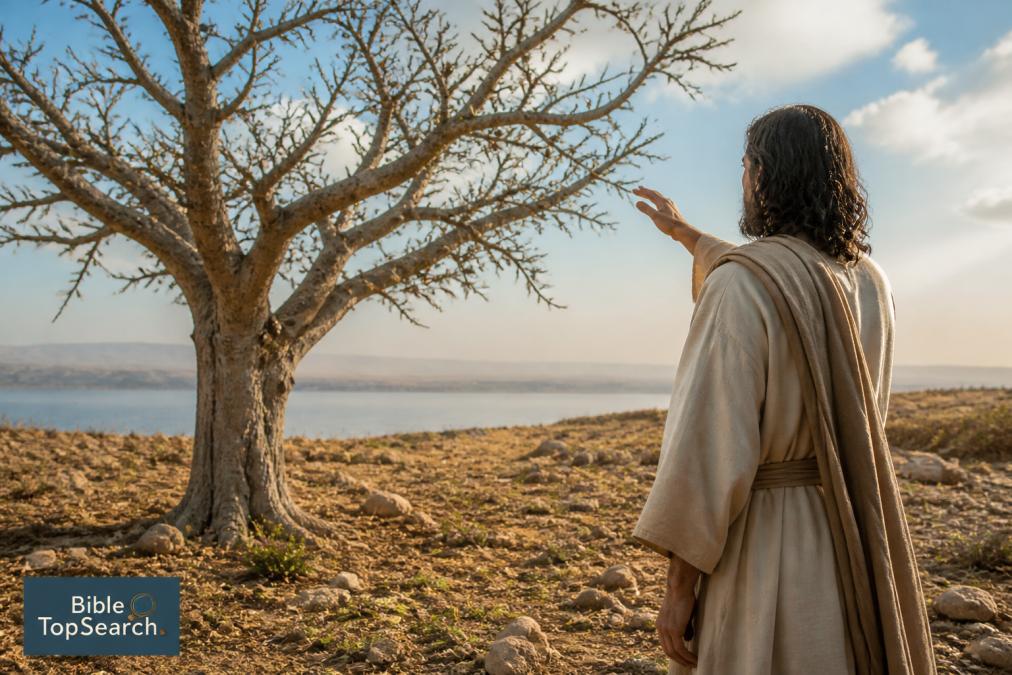
Jesus cursed the fig tree as a prophetic sign-act, a living parable about spiritual fruitlessness and judgment. The tree appeared healthy with leaves, suggesting it should bear fruit, yet it was barren. This mirrored Jesus’s critique of religious leaders who maintained outward piety while lacking genuine spiritual fruit. The withering wasn’t punishment of vegetation; it was Jesus teaching His disciples about faith, prayer, and the consequences of empty religiosity.
Biblical Context: Mark 11 and Matthew 21
The account appears in both Mark 11:12-25 and Matthew 21:18-22, with slight variations in emphasis. Mark emphasizes the narrative’s dramatic quality and the disciples’ astonishment, while Matthew condenses the story but highlights the tree’s immediate withering. Both place this event during Passover week in Jerusalem, a time of heightened spiritual significance and tension between Jesus and the religious establishment.
The timing matters. Jesus had just entered Jerusalem to triumphant crowds, yet He was moving toward confrontation with Temple authorities. The fig tree incident occurs on the way to and from the Temple, sandwiched between Jesus’s entry and His cleansing of the Temple. This literary structure, called intercalation or a “sandwich narrative,” invites us to read the two events together. The fruitless tree and the corrupt Temple share a common theme: external appearance masking internal emptiness.
The Agricultural Context: Why Jesus’s Expectation Was Reasonable
One common objection is that Jesus was unreasonable to expect fruit from a fig tree out of season. Understanding the specific botany of the fig tree in ancient Israel resolves this and strengthens the symbolic meaning.
The fig tree (Ficus carica) in the Mediterranean climate produces fruit in two stages. The first crop, called the taqsh in Hebrew or “early figs,” develops on the previous year’s growth before the tree produces its main foliage. These early figs appear in late spring, typically May or early June, before or alongside the emergence of the tree’s full leaf canopy. The second, larger crop ripens in late summer or early fall.
Mark 11:13 notes that it was “the season of figs,” which most scholars understand to mean the early spring period when the taqsh would be developing. If a fig tree had already produced full foliage, as this tree had, it should have had early figs present. The presence of leaves without fruit was botanically unusual and indicated something was wrong with the tree’s root system or overall health.
This detail is crucial: Jesus wasn’t making an unreasonable demand. He was observing that a tree displaying signs of fruitfulness (full leaves) lacked the fruit that should accompany those signs. The tree’s misleading appearance, leaves without fruit, made it a perfect symbol for the religious leaders’ misleading appearance: external piety without internal transformation.
The Symbolism of the Fig Tree in Scripture
The fig tree carried deep symbolic weight throughout Hebrew Scripture, rooted in Israel’s covenant relationship with God. Understanding this symbolism helps us see why Jesus’s curse would have resonated powerfully with His disciples.
In Jeremiah 8:13, the prophet writes: “When I wanted to gather them, says the Lord, there are no grapes on the vine, nor figs on the fig tree; even the leaves are withered, and what I gave them has passed away from them” (NRSVCE). The fig tree’s barrenness becomes a sign of God’s judgment on Israel’s unfaithfulness. Micah 7:1-2 deepens this imagery, connecting the absence of figs directly to the absence of righteousness: “Woe is me! For I am like one who, after the summer fruit has been gathered, after the vintage has been gleaned, finds no cluster to eat; there is no first-ripe fig for which I hunger. The faithful have disappeared from the land, and there is no one left who is upright” (NRSVCE).
But the fig tree also carried positive associations. In 1 Kings 4:25, Solomon’s reign is described as a time of peace and prosperity, with “every man under his vine and fig tree” living in security. The fig tree became shorthand for blessing, security, and God’s favor.
This is the theological backdrop Jesus’s disciples would have carried. When Jesus cursed the fig tree, He was invoking the entire prophetic tradition of judgment through fig tree imagery. The tree with leaves but no fruit recalled Jeremiah’s vision of barrenness as punishment. The curse echoed the prophets’ warnings that unfaithfulness leads to withering.
Moreover, the fig tree’s appearance versus reality perfectly captures Jesus’s repeated criticism of the Pharisees and scribes in Matthew 23:25-28: “Woe to you, scribes and Pharisees, hypocrites! For you clean the outside of the cup and of the plate, but inside they are full of greed and self-indulgence… Woe to you, scribes and Pharisees, hypocrites! For you are like whitewashed tombs, which on the outside look beautiful, but inside they are full of the bones of the dead and of all kinds of filth” (NRSVCE). The fig tree became a living sermon about this disconnect, impressive foliage masking internal emptiness.
Jesus Cleansing the Temple: Meaning and Connection
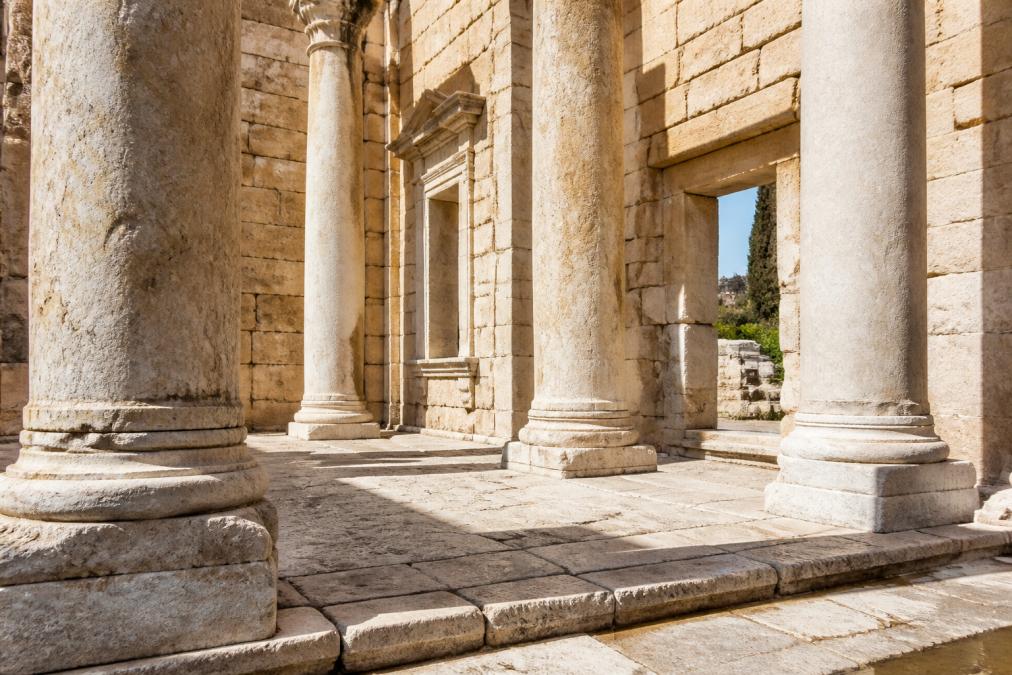
Immediately after the fig tree incident, Jesus entered the Temple and overturned the tables of money changers and those selling sacrificial animals. The Temple was supposed to be a house of prayer for all nations, a place where people encountered the living God. Instead, it had become a marketplace. The religious establishment had turned sacred space into a commercial enterprise, extracting profit from those seeking to worship.
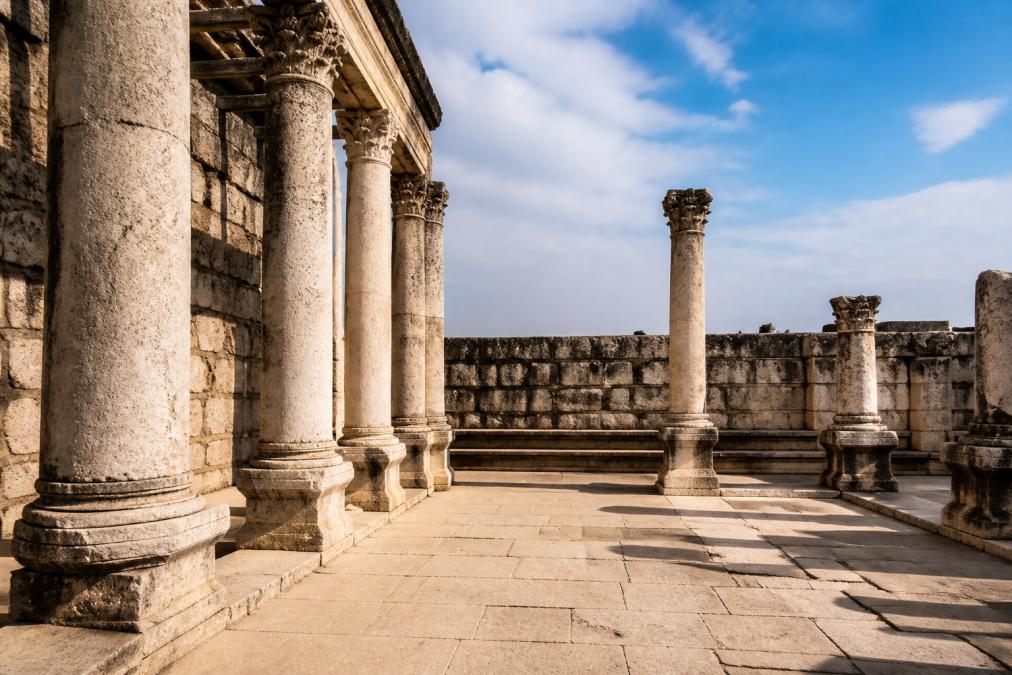
By placing these two events together, the Gospel writers invite us to see them as one unified message. The fruitless fig tree symbolizes the fruitless Temple. Both appear impressive on the surface. Both fail to produce what they should: the fig tree should bear fruit; the Temple should facilitate genuine encounter with God. Both face judgment for their spiritual emptiness.
This connection also points to something larger: Jesus is claiming messianic authority. He acts with the authority to judge what God has established. Only God could pronounce judgment on the Temple. By doing so, Jesus was asserting His identity as God’s authoritative representative, the one through whom God’s judgment flows.
Spiritual Fruitlessness in the Christian Life
Beyond its immediate historical context, why did Jesus curse the fig tree? Because fruitfulness matters. Throughout Scripture, spiritual fruit is the measure of a genuine relationship with God. Jesus taught that trees are known by their fruit. A good tree produces good fruit; a bad tree produces bad fruit.
What does spiritual fruit look like? Paul describes it in Galatians 5:22-23: “the fruit of the Spirit is love, joy, peace, patience, kindness, generosity, faithfulness, gentleness, and self-control” (NRSVCE). These aren’t external performances. They flow from a transformed heart, from a life genuinely connected to God through Christ.
The fig tree’s curse warns against spiritual complacency. It’s possible to look the part, to have leaves, to appear religious, while lacking genuine transformation. You can attend church, pray publicly, give offerings, and still be spiritually barren. The question Jesus presses is not “Do you look religious?” but “Are you bearing fruit? Is your life producing evidence of God’s work within you?”
This connects directly to Jesus’s teaching about abiding in Him. In John 15, He describes Himself as the vine and His followers as branches. Branches that remain connected to the vine naturally produce fruit. Branches that are cut off wither and are gathered for burning. The fruitfulness isn’t something we manufacture through effort; it’s the natural result of remaining in relationship with Christ.
Common Misunderstandings About This Passage
Several misinterpretations cloud our understanding of why Jesus cursed the fig tree.
Misunderstanding 1: Jesus was angry and petty. Some read this as Jesus throwing a tantrum because He was hungry and found no fruit. This misses the prophetic purpose entirely. Jesus was deliberately performing a sign-act with theological meaning. His actions were calculated and purposeful, not reactive and emotional.
Misunderstanding 2: This shows Jesus’s cruelty toward nature. Critics sometimes use this passage to suggest Jesus was callous about creation. But the tree is a prop in a larger message, not the point itself. The concern isn’t the tree’s welfare but the spiritual truth it communicates.
Misunderstanding 3: The curse is arbitrary because the tree was out of season. Some argue Jesus was unreasonable to expect fruit from a tree that shouldn’t have fruit. But fig trees in that region did produce early figs before full foliage. More importantly, this detail strengthens the symbolic meaning. The tree’s misleading appearance, leaves without fruit, perfectly mirrors the religious leaders’ misleading appearance: external piety without internal transformation.
Misunderstanding 4: This is only about Israel’s judgment, not about us. While the immediate context involves Jesus’s critique of the Temple and the religious establishment, the principle applies universally. Every generation of believers faces the temptation to maintain external religiosity while neglecting genuine spiritual transformation.
Misunderstanding 5: Spiritual fruitfulness is optional for Christians. Some treat the fig tree story as a historical curiosity rather than a call to transformation. But Jesus’s point is clear: fruitfulness matters. A life genuinely connected to God produces fruit. A life disconnected from Him withers.
What This Teaches Us About Faith and Prayer
After cursing the fig tree, Jesus’s disciples were amazed at how quickly it withered. In both Mark and Matthew, Jesus responds by teaching about faith and prayer. Mark records: “Jesus answered them, ‘Have faith in God. Truly I tell you, if you say to this mountain, “Be taken up and thrown into the sea,” and if you do not doubt in your heart, but believe that what you say will come to pass, it will be done for you. So I tell you, whatever you ask for in prayer, believe that you have received it, and it will be yours'” (Mark 11:22-24, NRSVCE).
This seems like a jarring shift until we understand that faith and fruitfulness are inseparable. The fig tree’s curse demonstrates God’s power and authority. The teaching about faith calls disciples to trust in that power and align their prayers with God’s purposes.
True faith isn’t wishful thinking or magical belief that God will grant any request. It’s trust in God’s character and alignment with His will. When we pray believing, we’re not trying to manipulate God; we’re aligning ourselves with what God desires. We’re asking for what fits within His kingdom purposes.
The connection to the fig tree is this: just as the tree’s fruitlessness reflected a deeper problem at its root, our prayerlessness or ineffective prayer often reflects a deeper disconnection from God’s purposes. When we genuinely believe and align our prayers with God’s kingdom, we participate in God’s transformative work.
Practical Application for Your Spiritual Life Today
What does the fig tree’s curse mean for you as a Christian today? Several practical implications emerge from this passage.
First, examine your spiritual fruit. Don’t settle for the appearance of spirituality. Ask yourself honestly: Am I growing in love? Am I becoming more patient with difficult people? Am I developing genuine generosity? Am I showing kindness even when it costs me? The fruit of the Spirit isn’t about feeling good or looking good; it’s about becoming more like Christ.
Second, check your roots. Fruitfulness flows from connection. If you’re not bearing fruit, the problem likely isn’t external discipline or effort. It’s a disconnection at the root level. Are you spending time in prayer? Are you reading Scripture and letting it shape your thinking? Are you in genuine community with other believers? These root practices matter because they keep you connected to Christ, the source of all spiritual life.
Third, be honest about religious performance. It’s easy to maintain external markers of faith while your heart drifts. You can attend church regularly, pray before meals, and give to charity while still being spiritually barren if these actions aren’t flowing from genuine love for God and others. Ask yourself: Why do I do what I do? Am I serving God or serving my own image?
Fourth, embrace God’s judgment as mercy. The fig tree’s withering feels harsh until you realize it’s an act of mercy. God doesn’t leave us in spiritual complacency. He confronts us, calls us to account, invites us to deeper transformation. If you’re experiencing conviction about spiritual fruitlessness in your own life, receive it as God’s gracious call to return, to reconnect, to bear fruit.
Fifth, align your prayers with God’s purposes. Stop praying only for comfort and convenience. Start praying for transformation, your own and others’. Pray for obstacles to God’s kingdom to be removed. Pray for fruitfulness in your church, your family, your workplace. Pray believing that God is at work, that His purposes will prevail, that you can participate in His transformative work through prayer and faithful living.
Conclusion and Further Study
Why did Jesus curse the fig tree? Because fruitlessness matters. Because spiritual transformation is the point of following Christ. Because God calls us to genuine faith, not mere performance. Because the gap between appearance and reality, between leaves and fruit, reveals something broken that needs healing.
The fig tree’s curse is ultimately an invitation. It invites us to examine our own lives, to ask whether we’re bearing genuine spiritual fruit or merely maintaining religious appearance. It invites us to reconnect with Christ, to align our prayers with His purposes, to trust in God’s power and authority. It invites us to participate in God’s transformative work, both in ourselves and in the world around us.
At BibleTopSearch.com, we believe that understanding Scripture in its proper context transforms how we read the Bible. The fig tree story isn’t a puzzle to solve; it’s a prophetic word to receive. We encourage you to read Mark 11:12-25 and Matthew 21:18-22 yourself, allowing the Spirit to speak to your own heart about fruitfulness and faith.
We invite you to explore more of BibleTopSearch’s resources on prayer, faith, and spiritual transformation. Watch our corresponding video teaching on this passage for deeper insights. Download our free Bible guide on the Gospels to understand how Mark and Matthew present Jesus’s ministry. Continue exploring Bible Answers to deepen your understanding of Scripture and grow in your relationship with Christ.
Frequently Asked Questions
Why did Jesus curse the fig tree if it wasn't the season for figs?
Jesus used the fig tree as a prophetic sign-act, not a literal judgment about fruit production. Mark notes it wasn't fig season, which makes the cursing deliberately symbolic. Jesus was teaching about spiritual readiness and the danger of looking fruitful outwardly while being empty within. The timing itself—during Passover season when pilgrims filled Jerusalem—emphasized the message about Israel's religious establishment appearing pious but lacking true spiritual fruitfulness and faith.
What does the fig tree symbolize in biblical context?
In Scripture, the fig tree represents Israel's covenant relationship with God and spiritual fruitfulness. Jesus' cursing of the unfruitful fig tree was a prophetic judgment on the nation's religious hypocrisy—particularly the Temple system that had become corrupt. The withered tree symbolized God's judgment on a people who looked righteous externally but failed to produce the spiritual fruit He expected: justice, mercy, and genuine faith. This connects to Old Testament prophecies in Jeremiah and Micah about Israel's unfaithfulness.
How does the fig tree incident relate to the cleansing of the temple?
Mark and Matthew structure these events as a 'sandwich' narrative: Jesus curses the fig tree, cleanses the Temple, then returns to see the withered tree. This literary structure shows they're meant to be read together. The unfruitful fig tree symbolizes the Temple itself—outwardly impressive but spiritually empty and corrupt. Jesus' cleansing of the Temple demonstrates His messianic authority and judgment on religious institutions that exploit rather than serve God's people. Both events reveal the same message: external appearance means nothing without genuine spiritual substance.
What can we learn about faith and prayer from this passage?
Jesus teaches His disciples that faith moves mountains and prayer changes reality. After showing the withered fig tree, He emphasizes that whatever believers ask in prayer, believing they will receive it, they will get. The lesson isn't about commanding nature but about the power of aligned faith—trusting God's character and purposes. The fig tree's withering demonstrates judgment on faithlessness, while Jesus' teaching invites disciples into a deeper faith that produces genuine spiritual fruitfulness through prayer and trust in God's kingdom.