Table of Contents
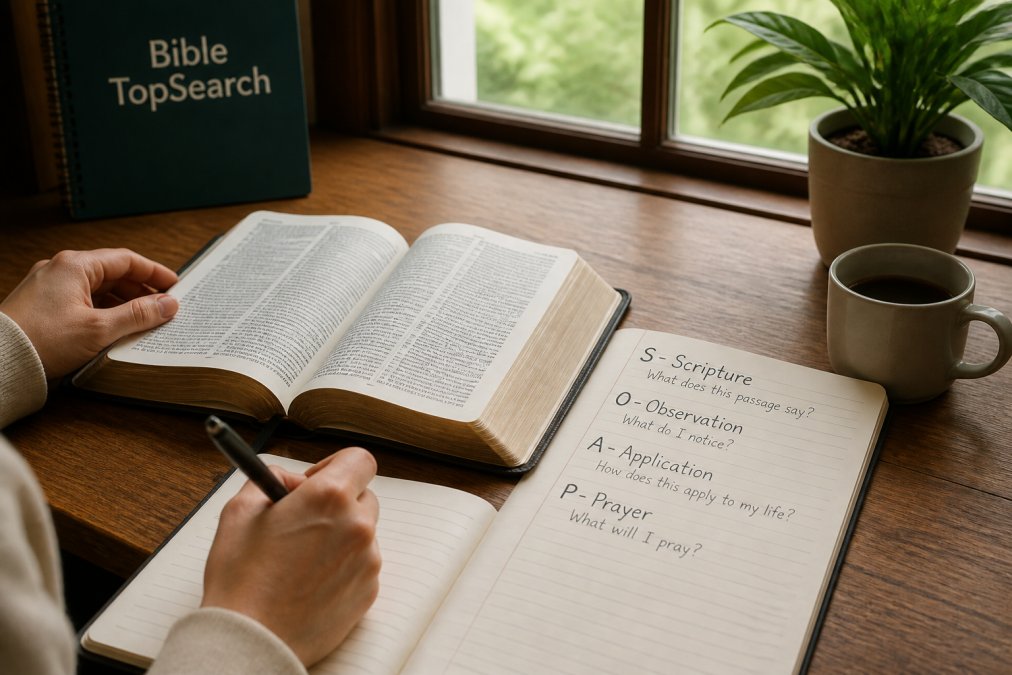
- What Is the SOAP Method for Bible Study?
- Breaking Down the SOAP Acronym: Scripture, Observation, Application, Prayer
- Step-by-Step Guide to Using the SOAP Method
- SOAP Method Examples for Beginners
- How to Apply Scripture to Life Through SOAP
- Why the SOAP Method Works for Bible Study
- SOAP Bible Study Template: Digital vs. Analog Journaling
- Best Bible Study Methods for New Believers
- Common Struggles with SOAP and How to Overcome Them
- Integrating SOAP with Your Daily Reading Plan
- Frequently Asked Questions
What Is the SOAP Method for Bible Study?
Learning how to use soap method for bible study is a simple way to understand Scripture and apply it to your life. SOAP stands for Scripture, Observation, Application, and Prayer. It’s a structured approach designed for new believers and anyone wanting to deepen their relationship with God’s Word.
This method transforms Bible study from passive reading into active engagement. Instead of skimming verses, you slow down and really think about what God is saying. You write down what you notice. You ask how it applies to you. Then you pray about it. That’s the power of the SOAP method for Bible study.
At BibleTopSearch.com, this approach helps people move from confusion to clarity. Whether you’re returning to faith after years away or picking up the Bible for the first time, the SOAP method gives you a clear path forward.
Breaking Down the SOAP Acronym: Scripture, Observation, Application, Prayer
Each letter in SOAP represents a step in your Bible study journey. Understanding what each step means helps you use the method effectively.
Scripture: Choose Your Bible Passage
Scripture is your starting point. You select a Bible passage to study. This might be a single verse, a few verses, or a short passage.
The passage you choose can come from different sources:
- A Bible reading plan you’re following
- A verse someone recommended
- Something you heard in church
- A topic you want to understand better
Don’t overthink this part. Start small. One verse or a short passage is better than trying to study an entire chapter at first. As you grow comfortable with how to use soap method for bible study, you can tackle longer passages.
Pick a passage that speaks to something happening in your life right now. Personal relevance makes the study more meaningful and memorable.
Observation: Read and Notice Details
Observation means reading carefully and noticing what’s actually there. This is where you become a detective in Scripture.
When you read, ask yourself questions like these:
- Who is speaking?
- Who are they speaking to?
- What’s the main idea?
- Are there repeated words or phrases?
- What’s the context around this passage?
- What does the passage say about God, Jesus, or how to live?
Write down everything you notice. Don’t filter or judge. Just observe what the text actually says. This step separates the SOAP method for Bible study from casual reading. You’re engaging your mind with God’s Word in a deeper way.
Application: Connect Truth to Your Life
Application is where the Bible moves from the page into your heart. This step asks: How does this passage apply to me today?
Think about these questions:
- What is God teaching me through this passage?
- How does this change the way I think or act?
- Is there a command to obey?
- Is there a promise to claim?
- Is there an example to follow?
Write down one specific way you’ll apply what you’ve learned. Make it concrete. Instead of “I’ll be more loving,” write “I’ll call my sister today and tell her I’m sorry for what I said.”
The application step is what makes the SOAP method for Bible study transformative. It bridges the gap between ancient Scripture and your modern life.
Avoid making the application too broad or vague. Vague applications are forgotten by tomorrow. Specific applications change behavior and deepen faith.
Prayer: Respond to God’s Word
Prayer is your conversation with God about what you’ve learned. This completes the SOAP method for Bible study by turning your study into worship.
Your prayer might include:
- Thanking God for what He’s shown you
- Asking Him to help you obey what you’ve learned
- Confessing any sin the passage revealed
- Asking questions you still have
- Committing to live out the application
Prayer isn’t formal or fancy. Talk to God like you’d talk to a trusted friend. Be honest. Be real. Let Scripture shape your prayers.
Step-by-Step Guide to Using the SOAP Method
Here’s how to walk through the SOAP method for Bible study in practical steps. This guide works whether you’re using paper or a digital tool.

Step 1: Select a Bible Passage
Open your Bible or Bible app. Choose your passage. Write it down or note the reference.
If you don’t know where to start, use a Bible reading plan. Many apps and websites offer free plans that guide you through Scripture systematically. A plan removes the guesswork.
Step 2: Read and Observe
Read your passage slowly. Read it at least twice. Use a version like the New Revised Standard Version Catholic Edition (NRSVCE) that balances word-for-word accuracy with readability.
After reading, grab a pen or open your digital journal. Write down:
- The main idea of the passage
- Key words or phrases that stand out
- Who is speaking
- The historical or cultural context if you know it
Don’t worry about being perfect. Observation is about noticing, not analyzing like a theologian.
Step 3: Write Your Observations
Spend a few minutes writing what you noticed. This step makes the SOAP method for Bible study stick in your memory better than just thinking about it.
Write naturally. Bullet points work. Full sentences work. Drawings work. Whatever helps you capture what you see.
Step 4: Develop Your Application
Now ask: What does this mean for my life?
Write one specific action or change you’ll make based on what you learned. Make it measurable. Make it doable this week.
Step 5: Pray Your Response
Close with prayer. Thank God. Ask for help. Commit to the application. Keep it simple and sincere.
SOAP Method Examples for Beginners
Seeing examples helps you understand how to use the SOAP method for Bible study. Here are two real examples.
Example 1: Matthew 6:11 (The Lord’s Prayer)
Scripture: “Give us this day our daily bread” (NRSVCE)
Observation:
- Jesus is teaching His disciples how to pray
- “Daily bread” likely means both physical food and spiritual nourishment
- The word “us” shows this is a prayer for community, not just individuals
- Jesus emphasizes trusting God for what we need today, not worrying about tomorrow
Application: I worry too much about money and the future. This week, when anxiety about bills comes up, I’ll pause and pray this line instead of spiraling.
Prayer: God, help me trust You with my needs. Calm my anxious thoughts. Remind me that You care for me.
Example 2: 1 Peter 3:15 (Be Ready to Give a Reason)
Scripture: “Always be ready to make your defense to anyone who demands from you an accounting for the hope that is in you” (NRSVCE)
Observation:
- Peter is writing to people facing persecution
- “Defense” here means explanation, not argument
- The hope Peter mentions comes from faith in Christ
- This is about being prepared, not aggressive
Application: A coworker asked me yesterday why I’m a Christian. I froze. This week, I’ll write down three reasons my faith matters to me so I’m ready next time.
Prayer: Holy Spirit, give me courage to speak about my faith. Help me explain my hope clearly and with love.
These examples show how the SOAP method for Bible study works in real situations.
How to Apply Scripture to Life Through SOAP
The application step is where transformation happens. Many people struggle here. They understand the passage but don’t know how to make it personal.
Here’s how to move from understanding to application:
Ask specific questions. Don’t just ask “How does this apply?” Ask “What does this passage say about how I should treat my family?” or “What does this teach about money?” Specific questions lead to specific answers.
Look for commands, promises, or examples. Commands tell you what to do. Promises tell you what God will do. Examples show you how to live. Every passage usually contains at least one of these.
Connect to your actual life. Think about your relationships, your work, your struggles, your goals. How does the passage speak to your real world? Not your ideal world. Your actual world.
Write it down. Write your application in clear language. “I will be kinder” is too vague. “When my kids interrupt me while I’m working, I will put down my phone and listen instead of getting frustrated” is specific enough to remember and do.
The SOAP method for Bible study only works if you actually apply what you learn. Application is where faith becomes action.
The gap between knowing Scripture and living Scripture is application. This is where the SOAP method transforms your life, not just your knowledge.
Why the SOAP Method Works for Bible Study
The SOAP method for Bible study is effective because it engages your whole self. You use your mind to observe. You use your heart to apply. You use your spirit to pray.
This method also creates a record. When you write things down, you remember them better. You can look back at your SOAP journal months later and see how God has worked in your life.
The structure removes confusion. New believers often don’t know where to start with Bible study. The SOAP method gives you a clear path. You’re not wandering. You know what to do at each step.
The method also balances speed with depth. You’re not spending hours on one verse. But you’re not skimming either. You’re spending enough time to really understand and apply what you’re reading.
Enjoyed this article? Download your FREE guide: Ten Difficult Bible Questions —Answered. →
The SOAP method is simple enough for beginners. It’s deep enough for experienced believers. It’s flexible enough to work with any passage.
SOAP Bible Study Template: Digital vs. Analog Journaling
You can practice the SOAP method for Bible study on paper or digitally. Each approach has strengths.
Analog Journaling with Paper and Pen
Writing by hand slows you down. This helps you think more deeply. Handwriting also engages your memory better than typing.
A simple paper template looks like this:
Date: _______________
Scripture Reference: _______________
Passage Text:
[Write or paste the verse]
Observation:
[What do you notice?]
Application:
[How does this apply to your life?]
Prayer:
[Your prayer response]
Many people find that writing by hand makes Bible study feel more personal and intimate. There’s something about the physical act of writing that connects you to God’s Word differently than reading on a screen.
Digital Journaling Tools and Apps
Digital tools offer convenience. You can access your journal anywhere. You can search past entries. You can add audio or images.
Common approaches include:
- Bible apps with built-in journaling features
- Note-taking apps like OneNote or Notion
- Google Docs or Word documents
- Specialized Bible study apps
Digital journaling works well if you’re always on your phone or computer. It’s also good if you like organizing your notes and searching them later.
The best tool is the one you’ll actually use. If you’re more likely to journal digitally, use digital. If paper feels more natural, use paper. The SOAP method for Bible study works either way.
Digital journaling works best for people who are always on devices, like organizing searchable notes, and want to include multimedia. Analog journaling suits people who think better by writing by hand and prefer a slower, more meditative pace.
Best Bible Study Methods for New Believers
The SOAP method for Bible study is excellent for beginners. But other methods exist too. Understanding your options helps you choose what fits your style.
The SOAP Method works great because it’s structured and simple. You know exactly what to do at each step. It’s perfect if you like having a clear process.
Lectio Divina is an ancient method with four steps: read, meditate, pray, contemplate. It’s more contemplative than SOAP. It emphasizes listening to God rather than analyzing Scripture.
The Inductive Method digs deeper into the text. You study word meanings, historical context, and cross-references. It requires more work but gives deeper understanding. It’s good once you’re comfortable with Bible study.
Topical Study focuses on one topic across the whole Bible. You might study “forgiveness” or “prayer” and look at every passage about it. This shows you how Scripture develops a theme.
Devotional Reading is less structured. You read a passage and reflect on it personally. It’s good for daily quiet time but less systematic than SOAP.
For new believers, the SOAP method for Bible study usually works best because it balances structure with simplicity. You’re not overwhelmed. You’re not bored. You’re engaged with Scripture in a way that changes you.
Common Struggles with SOAP and How to Overcome Them
Even though the SOAP method for Bible study is simple, people run into challenges. Here’s how to handle them.
“I don’t understand what the passage means.”
This is normal. The Bible was written thousands of years ago in different cultures. Get a study Bible that explains difficult passages. Or use a Bible commentary. Ask a trusted Christian friend. Don’t let confusion stop you. Keep going.
“I can’t think of an application.”
Start with how the passage challenges you to change. Does it call you to be more patient? More honest? More generous? More trusting? Find the character quality the passage addresses. Then apply it to your life.
“I keep forgetting to pray.”
Prayer is the final step. Don’t skip it. Set a reminder on your phone. Write “PRAY” at the end of your SOAP entry. Make it part of your routine so it becomes automatic.
“I’m studying but nothing is changing.”
Real change takes time. You’re planting seeds. The Holy Spirit is the one who makes them grow. Keep studying. Keep applying. Keep praying. Trust that God is working even when you don’t see results immediately.
“I don’t know which passage to study.”
Use a Bible reading plan. Don’t choose randomly. A plan guides you through Scripture systematically. It removes the decision-making and keeps you consistent.
The SOAP method for Bible study is a tool. Tools only work if you use them. Start small. Study one passage a day. Do this for a month. You’ll see the difference in your life.
Integrating SOAP with Your Daily Reading Plan
Many people use Bible reading plans alongside the SOAP method for Bible study. This combination works well.
A reading plan tells you what to read each day. The SOAP method tells you how to study it deeply. Together, they create a balanced Bible study life.
Here’s how to combine them:
Use your reading plan to choose the passage. Don’t spend time deciding what to study. Your plan tells you.
Do a quick SOAP on the main passage. You don’t have to SOAP every single verse. Pick the main passage or the verse that stands out most.
Keep your SOAP journal organized by date. This helps you track your progress and look back at what you’ve learned.
Read the rest of the plan without SOAP. You’re reading for overview. You’re seeing the bigger story. Then you go deep on one passage.
This approach gives you both breadth and depth. You’re reading through the Bible systematically. You’re also studying deeply enough to let Scripture change you.
Many people find that doing SOAP on just one passage per day is sustainable. If you try to SOAP every verse, you’ll burn out. If you read without ever going deep, you’ll stay stuck. This balance works.
The SOAP method for Bible study is one of the most practical tools for growing in your faith. It’s simple enough for beginners. It’s deep enough to sustain a lifetime of learning. Most importantly, it connects you to God’s Word in a way that transforms how you live.
Start today. Pick one passage. Work through Scripture, Observation, Application, and Prayer. Write it down. Do it again tomorrow. In a month, you’ll see how this simple method has changed your understanding of the Bible and your relationship with Christ.
Ready to go deeper? Explore more Bible study resources at BibleTopSearch.com. Watch our video teaching on the SOAP method. Download our free Bible study guide. Continue your journey of discovering what Scripture truly says and how it applies to your life today.
Frequently Asked Questions
What does the acronym S.O.A.P. stand for in Bible study?
SOAP stands for Scripture, Observation, Application, and Prayer. Scripture means choosing a Bible passage to study. Observation involves reading carefully and noting details like repeated words, context, and who is speaking. Application asks how the passage applies to your life today. Prayer is your response to God’s Word, offering your thoughts and asking the Holy Spirit to transform your heart. This method helps you move from simply reading Scripture to truly understanding and living it out.
How do I write a SOAP journal entry for Bible study?
Start by writing the Scripture reference and verse you’re studying. Under Observation, jot down what you notice: repeated words, the speaker’s tone, historical context, or connections to other verses. For Application, write how this truth speaks to your current situation or what God might be teaching you. Finally, under Prayer, write your response to God, confess, thank Him, ask for help, or commit to a specific action. Keep it simple and honest. Your journal doesn’t need to be perfect; it’s a conversation with God through His Word.
Is the SOAP method effective for daily devotional time?
Yes, the SOAP method works well for daily devotions because it combines reading, reflection, and prayer in one focused practice. Instead of rushing through a Bible passage, you slow down and engage deeply with Scripture. This reflective approach helps the Holy Spirit speak to your heart and strengthens your spiritual discipline. Many believers find that spending 15-30 minutes on a single passage using SOAP transforms their quiet time from routine to meaningful encounter with God’s Word.
Can the SOAP method be used with any Bible translation?
Absolutely. The SOAP method works with any Bible translation, including the New Revised Standard Version Catholic Edition (NRSVCE). Choose a translation that’s easy for you to understand. Some people use multiple translations to gain deeper insight during the Observation step. What matters most is that you’re engaging with God’s actual Word, not the translation you choose.