
Table of Contents
- What Does the Bible Say About Making Life Choices?
- Biblical Context: God’s Invitation to Seek His Will
- Seeking Wise Counsel and the Role of Prayer in Decision Making
- Bible Verses for Decision Making: What Scripture Teaches
- Steps for Biblical Decision Making: A Practical Framework
- Step 1: Pray and Surrender Your Will
- Step 2: Study Scripture for Scriptural Principles
- Step 3: Seek Godly Wisdom from Trusted Believers
- Step 4: Test Your Decision Against God’s Word
- Step 5: Listen for the Holy Spirit’s Conviction
- Step 6: Consider Your Spiritual Maturity and Season
- Step 7: Move Forward in Faith and Obedience
- Distinguishing Between Spiritual and Carnal Choices
- Aligning Your Choices With God’s Will: Moral Integrity and Stewardship
- Handling God’s Silence During Major Life Transitions
- Common Misunderstandings About Biblical Guidance
- Practical Application for Today: Making Decisions You Can Trust
- Conclusion
- Encourage Further Bible Study
- Frequently Asked Questions
Last Updated: August 31, 2026
What Does the Bible Say About Making Life Choices?
Short Answer
The Bible teaches that seeking biblical guidance for life choices means combining prayer, Scripture study, wise counsel, and attentiveness to the Holy Spirit’s leading. God invites us into a relationship where He actively guides our decisions through His Word, trusted believers, and the inner conviction of the Holy Spirit.
Biblical Context: God’s Invitation to Seek His Will
God doesn’t want you stumbling through life’s biggest decisions alone. From Scripture’s opening pages, we see a God who speaks, guides, and invites His people into partnership with Him. The invitation to seek biblical guidance isn’t about earning God’s approval through perfect decision-making, it’s about aligning yourself with His character and purposes.
Throughout Scripture, faithful believers sought God’s direction before major moves. Abraham waited for God’s call before leaving his homeland. Moses asked God for wisdom before leading Israel. Nehemiah prayed and fasted before rebuilding Jerusalem’s walls. These were active engagements with God through prayer, reflection, and consultation with others.
The core truth is this: God cares about your life, your relationships, career, finances, health, and spiritual growth. Biblical guidance flows from understanding that you’re invited into conversation with the God who created you and knows the future you cannot see.
Seeking Wise Counsel and the Role of Prayer in Decision Making
Proverbs repeatedly emphasizes that wisdom comes through counsel. “Without counsel, plans fail, but with many advisers they succeed” (Proverbs 15:22, NRSVCE). This recognizes that God often works through the wisdom of trusted believers around us.
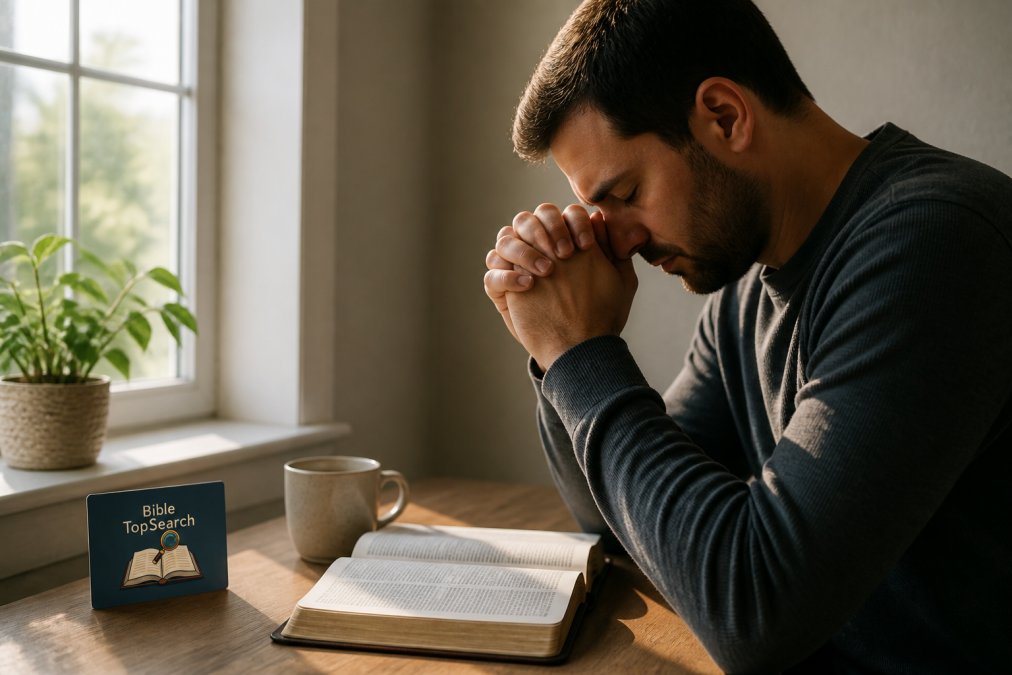
Prayer is foundational to decision-making. It’s not about manipulating God into blessing your predetermined choice, but about surrendering your will to His, asking Him to align your desires with His purposes, and creating space to hear His voice through Scripture and the Holy Spirit’s conviction.
When you pray about a decision, you acknowledge your dependence on God, invite the Holy Spirit to work within your heart, and create mental space to think clearly rather than act impulsively from fear or desire.
Seeking wise counsel means identifying believers who know Scripture well, live with spiritual maturity, and demonstrate the fruit of the Holy Spirit. These are people who won’t simply tell you what you want to hear, but will challenge you to consider God’s Word carefully.
Bible Verses for Decision Making: What Scripture Teaches
Scripture provides direct guidance on how to approach life’s choices:
Proverbs 3:5-6 (NRSVCE) – “Trust in the Lord with all your heart, and do not rely on your own insight. In all your ways acknowledge him, and he will make straight your paths.” Trust God more than your own reasoning, and acknowledge Him in every decision.
James 1:5 (NRSVCE) – “If any of you is lacking in wisdom, ask God, who gives to all generously and ungrudgingly, and it will be given you.” God promises to give wisdom when we ask, not necessarily what we want, but the wisdom we need to make choices that honor Him.
Romans 12:2 (NRSVCE) – “Do not be conformed to this world, but be transformed by the renewing of your minds, so that you may discern what is the will of God, what is good and acceptable and perfect.” Discerning God’s will requires renewing your mind through Scripture, prayer, and spiritual growth.
Colossians 3:15 (NRSVCE) – “And let the peace of Christ rule in your hearts, to which indeed you were called in the one body. And be thankful.” The peace of Christ becomes an inner compass; when a decision aligns with God’s will, His peace guards your heart.
Psalm 37:4 (NRSVCE) – “Take delight in the Lord, and he will give you the desires of your heart.” As you grow closer to God, your wants increasingly reflect His purposes.
Steps for Biblical Decision Making: A Practical Framework
Making decisions according to biblical guidance follows a process integrating prayer, Scripture study, counsel, and discernment:
Step 1: Pray and Surrender Your Will
Bring your decision to God in prayer without your mind already made up. Pray something like: “Lord, I’m facing this decision. I want Your will more than my own preference. Show me what honors You.”
Surrender is the foundation of spiritual maturity. It means acknowledging that God’s wisdom exceeds yours and His purposes for your life are better than what you could design alone.
Step 2: Study Scripture for Scriptural Principles
Identify biblical principles related to your decision. If you’re deciding about a relationship, study what Scripture teaches about marriage and character. If you’re choosing a career, examine biblical principles about stewardship and honesty. If you’re facing a financial decision, review what Scripture says about generosity and trusting God.
Don’t search Scripture to justify what you already want. Instead, immerse yourself in what God’s Word teaches about your category of decision. Ask yourself: “What does this passage reveal about God’s character? What does it teach about how followers of Christ should live?”
Step 3: Seek Godly Wisdom from Trusted Believers
Share your situation with mature believers who know you and understand Scripture. Describe your decision without leading them toward a particular answer. Ask: “What do you see? What does Scripture suggest? What concerns or affirmations come to mind?”
Listen carefully, especially to counsel that challenges your preference. If multiple trusted advisors point toward the same conclusion, that’s significant.
Step 4: Test Your Decision Against God’s Word
Return to Scripture with your emerging decision in mind. Does it align with biblical principles? Does it reflect God’s character? Test your decision against these questions: Does it honor God? Does it serve others’ good, not just my own? Does it align with my identity as a follower of Christ?
Step 5: Listen for the Holy Spirit’s Conviction
The Holy Spirit works within your heart to create conviction about what aligns with God’s will. This conviction often feels like peace or clarity. Pay attention to your emotional and spiritual responses. Do you feel God’s peace about this decision, or do you sense hesitation? Stepping into God’s will often involves some fear, but it’s accompanied by deeper peace underneath.
Step 6: Consider Your Spiritual Maturity and Season
Your current season of faith matters. A decision right for someone with years of spiritual maturity might not be right for someone newly committed to Christ. Ask yourself: Do I have the spiritual resources to handle what this decision requires? Have I grown enough in my relationship with Christ to navigate what comes next?
Step 7: Move Forward in Faith and Obedience
Once you’ve prayed, studied Scripture, sought counsel, tested your decision, and sensed the Holy Spirit’s leading, it’s time to act. Move forward with confidence, knowing you’ve engaged the process faithfully. This doesn’t guarantee the outcome you hoped for, but it means you’re moving in alignment with God’s purposes.
Distinguishing Between Spiritual and Carnal Choices
Scripture distinguishes between choices reflecting spiritual maturity and alignment with God’s character, and carnal choices prioritizing worldly desires over God’s will.
A carnal choice serves immediate gratification or selfish ambition at the expense of spiritual growth or obedience to God’s Word. A spiritual choice often requires sacrifice and trust but deepens your relationship with Christ and produces the fruit of the Holy Spirit: love, joy, peace, patience, kindness, generosity, faithfulness, gentleness, and self-control.
Enjoyed this article? Download your FREE guide: Ten Difficult Bible Questions —Answered. →
Spiritual discernment means developing sensitivity to whether a choice reflects your deepest identity as a follower of Christ or old patterns of living for yourself.
Aligning Your Choices With God’s Will: Moral Integrity and Stewardship
Biblical guidance ultimately centers on two interconnected themes: moral integrity and stewardship.
Moral integrity means your choices reflect God’s character. You don’t compromise honesty to gain advantage. You don’t pursue relationships that compromise your spiritual health. You do what you say you’ll do, even when it costs you.
Stewardship means recognizing that everything you have, your time, talents, resources, relationships, opportunities, belongs to God. You’re not the owner; you’re the manager. This transforms decision-making. You’re not asking “What do I want?” but “What does God want me to do with what He’s entrusted to me?”
When you align your choices with God’s will through moral integrity and stewardship, you experience alignment with your truest self. You become the person God created you to be.
Handling God’s Silence During Major Life Transitions
One of the most challenging aspects of seeking biblical guidance is what happens when God seems silent. You’ve prayed, studied Scripture, and sought counsel, but you don’t sense clear direction.
Sometimes God’s silence invites you to deeper trust. He’s not absent; He’s inviting you to follow Him without the reassurance of clear signs. This builds faith and develops your capacity to trust God’s character rather than relying on His guidance to feel certain.
During seasons of silence, return to what you know is true about God from Scripture. Continue the practices that have sustained your faith: prayer, Scripture study, worship, community. Recognize that major life transitions often involve seasons of confusion before clarity emerges. Be patient with yourself. Sometimes God’s silence means “not yet,” sometimes “I’m inviting you to choose, and I’ll guide you through the consequences,” and sometimes you need more information before deciding.
Common Misunderstandings About Biblical Guidance
Several misunderstandings can derail your search for biblical guidance:
Misunderstanding 1: God’s guidance always feels peaceful. Sometimes following God’s will requires courage, and courage involves fear. You might feel called to a risky venture or countercultural choice. God’s guidance might feel like stepping off a cliff in faith.
Misunderstanding 2: There’s always one perfect choice. Often, God is less concerned with which specific option you choose and more concerned with how you choose. Multiple paths might align with His will.
Misunderstanding 3: Seeking God’s will means passivity. Some believers wait for God to make decisions for them. But God gave you a mind. Seeking His will means active engagement: prayer, study, thinking, conversation, and discernment.
Misunderstanding 4: You’ll know God’s will through signs. While God can work through circumstances, relying primarily on signs can lead you astray. God’s primary means of guidance is His Word and the Holy Spirit’s conviction.
Misunderstanding 5: Once you know God’s will, you’ll feel certain. Certainty is often a luxury you won’t have. You might move forward with 70% confidence, trusting that God will guide you through what you don’t yet understand.
Practical Application for Today: Making Decisions You Can Trust
Start with your current decision. What are you facing? A relationship question? A career choice? A financial decision? A relocation? Identify the decision clearly.
Commit to the process. Set aside time for genuine prayer, not rushed prayers while multitasking. Read Scripture passages related to your decision. Write down what you notice. What stands out? What challenges you?
Reach out to trusted believers. Describe your situation honestly. Ask for their perspective. Listen without defensiveness.

Sit with what you’ve learned. Don’t rush to conclusions. Often, clarity emerges gradually. You might notice that multiple sources, prayer, Scripture, counsel, circumstances, all point in the same direction. That convergence is significant.
Finally, decide and commit. You might not feel 100% certain, but you can feel confident that you’ve engaged the process faithfully. Move forward. If the decision proves unwise, you’ll learn from it. Either way, you’re growing in your ability to discern God’s will.
|
Step |
Focus |
Key Question |
|---|---|---|
|
Pray & Surrender |
Your heart posture |
Am I willing to accept God’s will over my preference? |
|
Biblical principles |
What does God’s Word teach about this category of decision? |
|
|
Seek Counsel |
Outside perspective |
What do mature believers see that I might be missing? |
|
Test Against God’s Word |
Alignment check |
Does this choice reflect God’s character and purposes? |
|
Listen for Conviction |
Holy Spirit’s leading |
Do I sense God’s peace about this direction? |
|
Consider Your Season |
Spiritual readiness |
Am I equipped spiritually to handle what this requires? |
|
Move Forward |
Action & faith |
Can I commit to this choice and trust God with the outcome? |
Conclusion
Seeking biblical guidance for life choices is one of the most important investments you can make in your spiritual growth and life direction. When you align your decisions with God’s will, you experience the deep satisfaction of living in harmony with your Creator’s purposes.
Encourage Further Bible Study
At BibleTopSearch.com, we believe that every follower of Christ deserves access to clear, biblically faithful guidance for life’s biggest questions. We’ve created resources specifically designed to help you understand what Scripture teaches and how to apply it to your real life. Our free Bible guides walk you through key passages on decision-making, discernment, and God’s will. Our video teachings explore how mature believers have navigated major life transitions.
We invite you to explore more biblical guidance for life choices through BibleTopSearch.com’s free resources. Watch our corresponding video teaching on this topic, download our free Bible guide on discernment and God’s will, and continue exploring Bible Answers to other questions you’re wrestling with.
Keep reading Scripture. Keep praying. Keep seeking wise counsel. Keep listening for the Holy Spirit’s conviction. Trust that God, who loves you infinitely more than you love yourself, is actively guiding you toward His best purposes for your life.
Frequently Asked Questions
Q: How can I know if a decision aligns with God’s will?
A: Test your decision against Scripture, seek confirmation through wise counsel, and listen for the Holy Spirit’s conviction. If your choice honors God’s Word, aligns with biblical values, and brings peace rather than anxiety, it likely reflects His guidance. Pray for clarity and remain open to correction. Remember that God often reveals His will gradually through prayer, discernment, and the counsel of mature believers.
Q: What are the most important Bible verses for decision making?
A: Key passages include Proverbs 3:5-6, which calls us to trust God with all our heart; James 1:5, which promises wisdom to those who ask; and Romans 12:2, which teaches us to be transformed by renewing our minds. Psalm 37:4 reminds us that when we delight in the Lord, He gives us the desires of our hearts. These verses form the foundation for biblical decision making by emphasizing prayer, Scripture study, and alignment with God’s character.
Q: What should I do when God seems silent during a difficult decision?
A: God’s silence doesn’t mean abandonment. Continue praying, studying Scripture, and seeking wise counsel. Sometimes God delays His answer to deepen your faith or redirect your path. Focus on obedience to what He has already revealed in His Word. Trust His timing and character even when you don’t feel His immediate guidance. Many believers find that patience and continued faithfulness during silence often precede clarity and divine providence.
Q: How do I balance my emotions with spiritual discernment when making choices?
A: Emotions are valid but shouldn’t be your only guide. Examine your feelings honestly, but test them against Scripture and seek accountability from trusted believers. Emotional intelligence helps you understand why you feel drawn to a choice, while spiritual discernment ensures that choice honors God. Pray for wisdom to distinguish between the Holy Spirit’s gentle conviction and anxiety or fear. This balance ensures decisions reflect both your authentic self and your commitment to God’s will.