Table of Contents
- Short Answer: What Jesus Wrote on the Ground
- Biblical Context of John 8:1-11
- The Significance of Jesus Writing on the Ground
- Theories About What Jesus Wrote
- The Law of Moses and Jesus’s Response
- Why Jesus Wrote Twice
- The Reaction of the Pharisees and Scribes
- Common Misunderstandings About This Passage
- What This Moment Reveals About Mercy and Judgment
- Practical Application for Today
Last Updated: August 12, 2026
Short Answer: What Jesus Wrote on the Ground
When the Pharisees and scribes brought a woman caught in adultery to Jesus, demanding he judge her according to the Law of Moses, Jesus responded by bending down and writing on the ground. The Gospel of John doesn’t tell us exactly what Jesus wrote, but theologians have proposed several theories: some believe he wrote the sins of the accusers, others suggest he referenced Jeremiah 17:13 about those who turn away from God, and still others see the act itself as a powerful gesture of divine authority and mercy. What matters most isn’t the specific words, but what the moment reveals about Jesus’s character, his refusal to condemn, his challenge to human judgment, and his offer of forgiveness to those who truly repent.
Biblical Context of John 8:1-11
The Setting and the Accusation
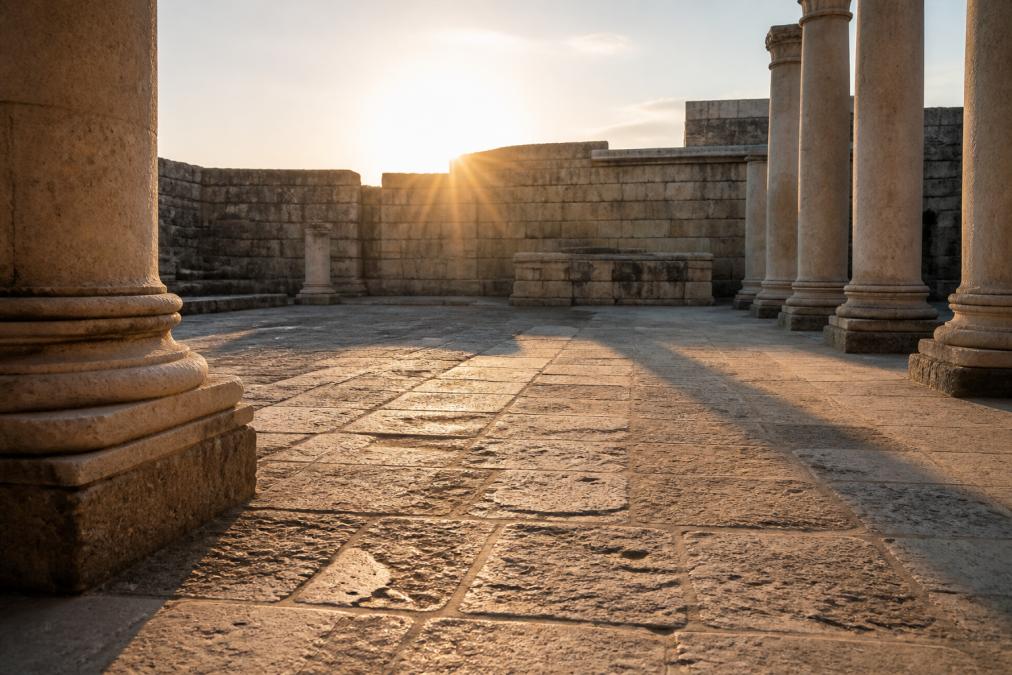
Early in the morning, Jesus was teaching in the Temple courtyard when the Pharisees and scribes interrupted him with a woman they claimed was caught in adultery. According to Jewish law, adultery was a serious offense with prescribed punishment. The accusers weren’t genuinely seeking justice; they were testing Jesus, trying to trap him into either contradicting the Law or appearing to condone sin.
The Gospel tells us that Jesus was interrupted mid-teaching, and the accusers “made her stand before all of them” (John 8:3, NRSVCE). This public humiliation was designed to pressure Jesus into making a judgment that would either compromise his message of mercy or put him at odds with the religious authorities.
Why the Pharisees and Scribes Brought Her
The Pharisees and scribes weren’t motivated by genuine concern for the Law. If they were, they would have brought both the man and the woman, since the Law of Moses required the same judgment for both parties in adultery. Only the woman’s presence reveals their true intent: to use her as a test case against Jesus.
Their goal was to create a dilemma. If Jesus said, “Stone her,” he would appear to endorse harsh judgment, contradicting his message of love. If he said, “Let her go,” he would seem to reject the Law of Moses, giving his opponents grounds to accuse him of undermining God’s commandments. Either way, they believed they could discredit him.
The Significance of Jesus Writing on the Ground
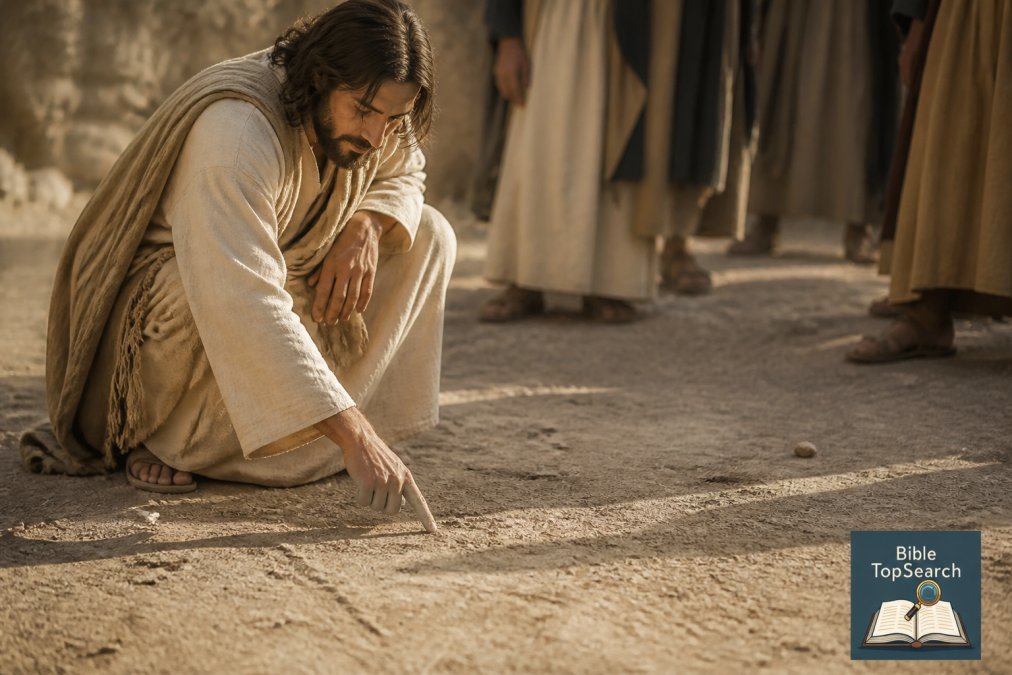
When faced with this trap, Jesus didn’t immediately answer. Instead, he bent down and began to write on the ground. This deliberate pause is significant. Rather than being drawn into their argument on their terms, Jesus created a moment of silence and reflection. His action communicated something profound: judgment is not as simple as the accusers wanted to make it.
The act of writing itself carried weight in Jewish culture. God’s finger had written the Ten Commandments on stone tablets at Mount Sinai (Exodus 31:18). When Jesus wrote on the ground with his finger, he was invoking that image of divine authority. The ground itself, dust and earth, stands in contrast to the permanent stone tablets, suggesting a message about the temporary nature of human judgment compared to God’s eternal law.
Jesus’s silence and writing also gave the accusers time to reflect. Sometimes what people need most isn’t a quick answer, but space to examine their own hearts.
Theories About What Jesus Wrote
The Finger of God and Divine Authority
The most compelling interpretation connects Jesus’s action to the “finger of God” imagery in Scripture. In Exodus 31:18, God wrote the Ten Commandments “with the finger of God.” When Jesus wrote on the ground with his finger, he was claiming divine authority in a subtle but unmistakable way.
The Pharisees and scribes would have recognized this allusion immediately. By writing as God had written, Jesus positioned himself not as a mere rabbi offering an opinion, but as the one who speaks with God’s own authority. His writing on the ground became a wordless declaration: “I am the source of true judgment.”
Some scholars suggest that Jesus’s writing was a visual parable, demonstrating that human judgments, written in dust, are temporary and subject to God’s greater wisdom.
Connection to Jeremiah 17:13
One intriguing theory links Jesus’s action to Jeremiah 17:13: “O hope of Israel, all who forsake you shall be put to shame; those who turn away from you shall be written in the earth, for they have forsaken the Lord, the fountain of living water” (NRSVCE).
If Jesus was writing the names of the accusers, or their sins, in the dust, he may have been invoking this passage. The Pharisees and scribes came to condemn the woman, but Jeremiah’s words suggest that those who turn away from God are the ones truly worthy of condemnation. By writing in the earth, Jesus may have been silently saying: “You accuse her, but look at yourselves. Your names are written here, in dust, because you have turned from the fountain of living water.”
This interpretation transforms the moment from a judgment scene into a mirror held up to the accusers.
The Greek Text and Linguistic Clues
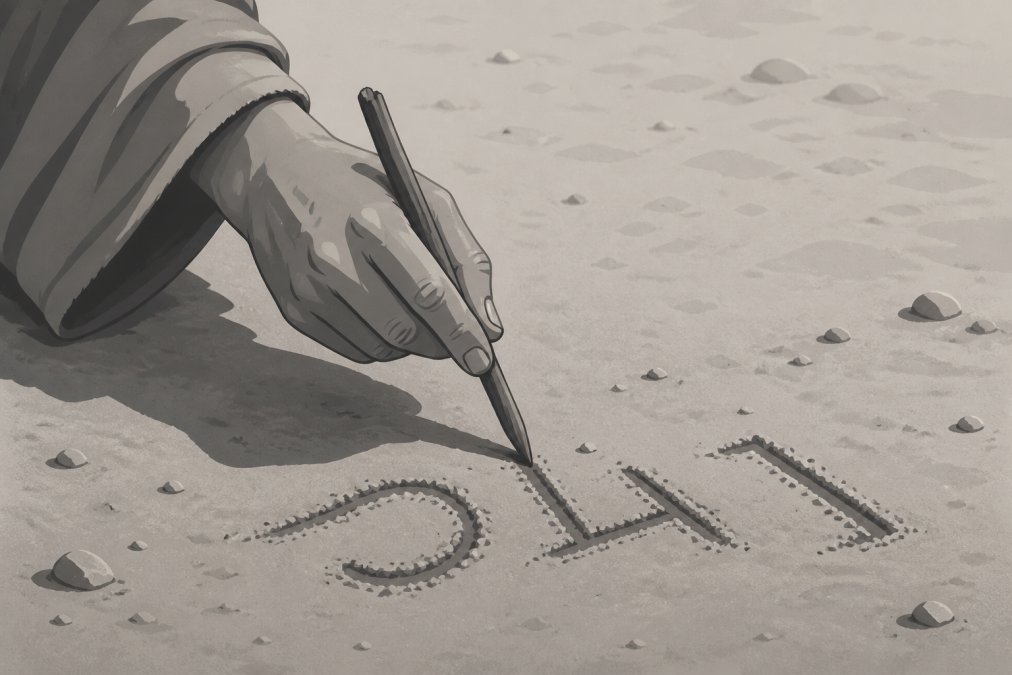
The Gospel of John uses the Greek verb katagraphō (κατέγραφεν), which means “to write down” or “to inscribe,” in John 8:6 and 8:8. This is distinct from the more common graphō (γράφω), which simply means “to write.” The prefix kata- suggests writing down or into a surface, implying deliberate inscription rather than casual marks.
This linguistic choice matters. Katagraphō appears rarely in the New Testament, making its use here intentional. It suggests that whatever Jesus wrote was meant to be read and noticed. The verb choice supports the theory that Jesus was writing something specific, whether names, sins, or a reference to Scripture, rather than merely making idle marks in the dust.
Archaeological Context: Writing Surfaces in the First-Century Temple
Understanding what Jesus wrote becomes clearer when we consider the physical reality of the Temple courtyard. The outer courts were paved with stone, but centuries of foot traffic and accumulated dust created a natural writing surface, similar to writing on a dusty floor.
First-century Jewish sources show that writing in dust or sand was a common, recognizable act. The Mishnah mentions writing in dust as a way to communicate or record information. This wasn’t an unusual gesture; it was something people would have understood immediately as intentional communication.
The choice of dust rather than parchment or stone was itself meaningful. Dust is temporary, erasable, and humble, qualities that stand in sharp contrast to the permanence of the stone tablets on which God wrote the Ten Commandments. By choosing this surface, Jesus may have been making a statement about the nature of human judgment: it is temporary, subject to revision, and ultimately answerable to God’s eternal law.
The Law of Moses and Jesus’s Response
The Law of Moses was given by God and remained sacred in Jewish tradition. When the Pharisees cited it, they weren’t wrong about what the law said; they were wrong about how to apply it. Jesus never rejected the Law; instead, he revealed its true purpose: not condemnation, but transformation.
After writing on the ground, Jesus stood up and spoke directly to the accusers: “Let anyone among you who is without sin be the first to throw a stone at her” (John 8:7, NRSVCE). This statement didn’t overturn the Law of Moses; it fulfilled its deeper meaning. The Law was meant to reveal sin and call people to repentance, not to be wielded as a weapon by those who considered themselves righteous.
Jesus’s response shows that judgment requires not just knowledge of the law, but personal integrity. No one in that crowd could claim to be sinless. The accusers left one by one, beginning with the eldest, perhaps because age had given them wisdom to recognize their own failings.
Why Jesus Wrote Twice
The Gospel account notes that Jesus bent down and wrote on the ground twice. After his statement about sinlessness, “he straightened up and said to her, ‘Woman, where are they? Has no one condemned you?’ She said, ‘No one, sir.’ And Jesus said, ‘Neither do I condemn you; go your way, and from now on do not sin again'” (John 8:10-11, NRSVCE).
The Structure of the Encounter
The two instances of writing frame the entire encounter and serve distinct purposes. The first writing occurs when Jesus is first confronted with the accusation, before he speaks, before the accusers leave. The second writing happens after Jesus has stood up and made his statement about sinlessness, in the silence that follows as the accusers depart one by one.
This structure is not accidental. John’s Gospel is carefully constructed, and the repetition of the writing action creates a literary bookend. The first writing introduces mystery and silence into a confrontational situation. The second writing concludes the encounter with the same gesture, suggesting that silence and reflection are the final word, not argument, not judgment, but quiet truth.
What the Repetition Reveals About Jesus’s Teaching Method
Jesus’s choice to write twice demonstrates a teaching method that modern readers often overlook. Rather than engaging in debate or offering lengthy explanation, Jesus uses silence and symbolic action to communicate. The repetition emphasizes that this approach, pausing, reflecting, writing, is central to his response.
In Jewish teaching tradition, silence and contemplation were valued as paths to understanding. The repetition of the writing action invites the accusers (and us, as readers) to sit with the moment, to resist the urge to immediately resolve the tension, and to allow truth to emerge through reflection rather than argument.
The two writings also create a pause in the narrative that allows the accusers time to process what Jesus has said. After his statement about sinlessness, there is a gap, a moment of silence represented by the second writing, before the woman and Jesus are alone together. This gap is psychologically and spiritually significant, giving the accusers space to feel the weight of conviction and choose whether to stay or leave.
The Reaction of the Pharisees and Scribes
When Jesus spoke about sinlessness, the Pharisees and scribes understood immediately that they had been challenged at a deeper level than they expected. They couldn’t argue with his logic; no one could claim perfection. Jesus had turned their trap back on them.
The Gospel tells us they “went away, one by one, beginning with the elders” (John 8:9, NRSVCE). This detail matters. The elders left first, suggesting that those with the most experience and wisdom recognized the truth in Jesus’s words. Their departure wasn’t a defeat; it was a moment of conviction. They recognized that they had come with the wrong spirit, seeking to trap rather than to seek truth.
The silence that followed was powerful. No one could defend their position or justify their judgment. The accusers had come expecting Jesus to either condemn the woman or contradict the Law. Instead, he exposed the hypocrisy in their hearts and offered them a chance to examine themselves.
Common Misunderstandings About This Passage
One common mistake is thinking Jesus was rejecting the Law of Moses entirely. He wasn’t. Jesus affirmed that sin is real and has consequences. When he told the woman to “go your way, and from now on do not sin again,” he acknowledged that her actions were wrong. His mercy didn’t erase the reality of sin; it offered a path beyond condemnation toward transformation.
Another misunderstanding is that Jesus was being soft on sin or suggesting that consequences don’t matter. Mercy and accountability aren’t opposites in Jesus’s teaching; they work together.
Some people also assume that because we don’t know exactly what Jesus wrote, the passage is unclear or unreliable. But the Gospel’s silence on this detail is actually part of its power. The specific words matter less than the message: Jesus’s authority, his mercy, and his refusal to participate in the accusers’ judgment.
What This Moment Reveals About Mercy and Judgment
This passage reveals something essential about how Jesus understood mercy and judgment. He didn’t see them as opposites. True judgment, in Jesus’s understanding, begins with recognizing our own sin. The Pharisees and scribes came as judges; Jesus invited them to see themselves as sinners in need of grace.
Mercy isn’t the absence of judgment; it’s judgment tempered by compassion and the offer of redemption. When Jesus said, “Neither do I condemn you,” he wasn’t pretending the woman’s sin didn’t matter. He was saying that condemnation isn’t the final word. Repentance and transformation are possible. That’s the heart of the Gospel.
This moment also shows that Jesus’s authority isn’t expressed through force or condemnation. His quiet writing on the ground, his simple statement about sinlessness, and his offer of forgiveness carried more weight than any punishment could have. True authority rests on truth and compassion.
Practical Application for Today
This passage challenges us to examine our own hearts before we judge others. When we’re tempted to judge someone harshly, this passage invites us to ask: Am I approaching this with humility? Have I considered my own failures? Am I seeking truth, or am I trying to win an argument?
Second, this passage offers hope to anyone who feels ashamed or condemned. If you’ve made serious mistakes, if you carry guilt, if you feel like others have written you off, Jesus’s words to the woman are for you: “Neither do I condemn you.” That doesn’t mean your actions didn’t matter or that there are no consequences. It means that condemnation isn’t your destiny. Repentance and a new life are possible.
Third, this passage teaches us about the power of silence and reflection. In our culture of constant argument and immediate responses, Jesus’s choice to write on the ground rather than immediately engage in debate is countercultural. Sometimes what people need isn’t a clever argument, but space to think and reflect.
Conclusion
What Did Jesus Write on the Ground? remains a mystery in the literal sense; the Gospel doesn’t tell us the exact words. But the passage is crystal clear in its meaning. Jesus demonstrated divine authority, challenged the accusers to examine their own hearts, and offered the woman forgiveness and a chance to change. He showed that true judgment belongs to God alone, and that mercy is more powerful than condemnation.
This moment stands as one of the most beautiful expressions of Jesus’s character in all of Scripture. It reveals a Jesus who is neither soft on sin nor harsh in judgment, but perfectly balanced in compassion and truth. When we encounter Jesus in this passage, we encounter someone who sees our sin but loves us anyway, who challenges our hypocrisy but offers us grace, and who invites us to a life of repentance and transformation.
Encourage Further Bible Study
We encourage you to read John 8:1-11 in full, preferably in the New Revised Standard Version Catholic Edition, and to sit with the passage. Notice the details: the early morning light, the woman’s isolation, the silence of Jesus’s writing, the gradual departure of the accusers, and the tenderness of Jesus’s final words.
Consider also reading Jeremiah 17:13 in context to explore the possible connection to Jesus’s writing. Reflect on how this passage challenges your own approach to judgment and mercy. Ask yourself: Where do I need to receive Jesus’s forgiveness? Where am I tempted to judge others harshly?
At BibleTopSearch.com, we’ve created resources to help you go deeper into passages like this one. Explore our free Bible guides and video teachings to continue your journey of understanding Scripture. Watch our corresponding video teaching on this passage, download your free study guide, and continue exploring the most searched Bible questions. Every passage of Scripture invites us closer to Jesus, and that journey of discovery is one we’re honored to walk with you.
Frequently Asked Questions
Why did Jesus write on the ground two times in John 8:1-11?
Jesus wrote twice—once when the Pharisees first confronted Him, and again after He spoke the famous words, 'Let anyone among you who is without sin be the first to throw a stone at her' (John 8:7, NRSVCE). The first writing may have created a pause that allowed Him to respond with divine wisdom. The second writing, after His challenge, symbolized His judgment being written down, much like the finger of God writing the Law on Mount Sinai. Both acts underscore His authority and the gravity of the moment.
What is the connection between Jeremiah 17:13 and John 8:1-11?
Jeremiah 17:13 states, 'O hope of Israel, O Lord! All who forsake you shall be put to shame; those who turn away from you shall be recorded in the earth, for they have forsaken the Lord, the fountain of living water' (NRSVCE). Many scholars see a parallel in Jesus writing on the ground—He may have been invoking this passage to show that the accusers' names were being written down by God, not the woman's. This connection highlights themes of judgment, shame, and the accusers' own sin.
Does the Bible explicitly state what Jesus wrote on the ground?
No. The Gospel of John never reveals what Jesus actually wrote. John 8:6 and 8:8 simply say He 'bent down and wrote with his finger on the ground' without specifying the words or symbols. This silence is intentional—it invites readers to reflect on the meaning rather than focus on literal text. The significance lies in the act itself: the gesture of writing, the use of His finger (evoking God's power), and the timing of His response to the accusers.
What does the Law of Moses say about adultery, and how did Jesus respond differently?
The Law of Moses in Leviticus 20:10 prescribed death for both the man and woman caught in adultery. However, the Pharisees brought only the woman, ignoring the man entirely and violating their own law. Jesus didn't overturn the Law; instead, He exposed the hypocrisy of the accusers. By challenging them with 'Let anyone among you who is without sin be the first to throw a stone at her' (John 8:7, NRSVCE), He redirected focus from the woman's sin to their own, revealing that true judgment belongs only to God. His mercy toward the woman—'Neither do I condemn you; go your way, and from now on do not sin again' (John 8:11, NRSVCE)—showed that even where the Law demanded death, God offers redemption through repentance.